



‘Ku × CFCL’ Artist
Takuro Kuwata
Born in Hiroshima Prefecture in 1981.
After studying at Kyoto Saga University of Arts Junior College and the Tajimi City Pottery Design and Technical Center, Kuwata is now based in Tajimi, Gifu Prefecture. Seeking a new interpretation of wabi-sabi in the tea ceremony, he has developed his own expressions of traditional tea-bowl techniques such as kairagi, or cracked glaze, and ishihaze, in which stones burst through the clay surface.
His awards include a special mention at the LOEWE Craft Prize in 2018 and the Japan Ceramic Society Award in 2021. In addition to contemporary art galleries in Europe and the United States, he has exhibited at museums worldwide, including the Hayward Gallery in London in 2022. His work is held in public collections including the Rubell Collection, Palm Springs Art Museum, 21st Century Museum of Contemporary Art, Kanazawa, University of Michigan Museum of Art, and Art Institute of Chicago.
Comment by Takuro Kuwata
Tajimi in Gifu Prefecture, where I am based, is well known as one of the centers of Mino ware. Traditional ceramic arts and industrial production have long coexisted here. However, as inexpensive products manufactured overseas have become more common, more local companies have closed under pressure from price competition. The region brings together a wide range of raw materials for mass production and has accumulated many production techniques over its long history. One of these is machine production, a remarkable technology quite different from handwork, but some of these machine production skills are also beginning to disappear.
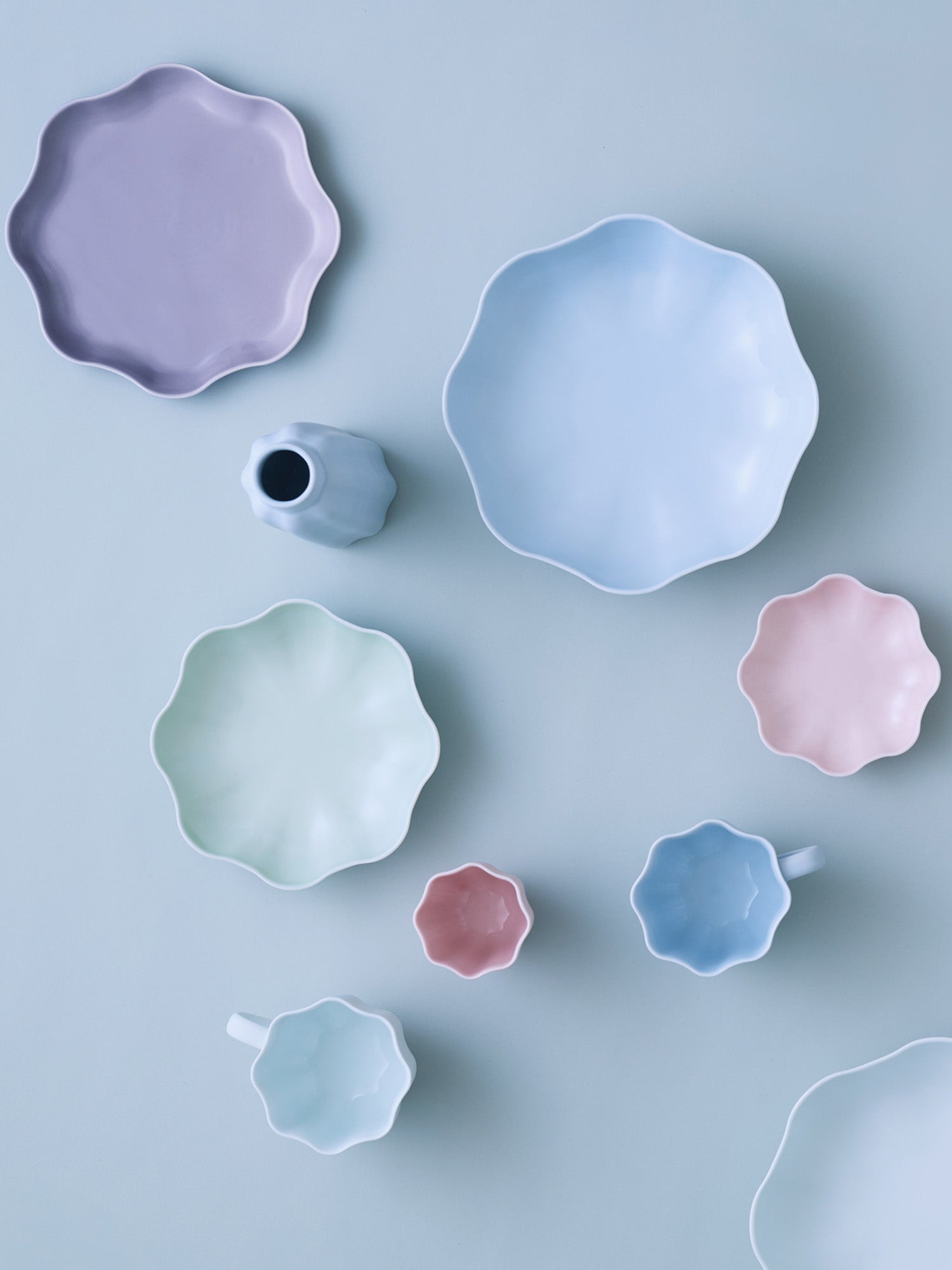
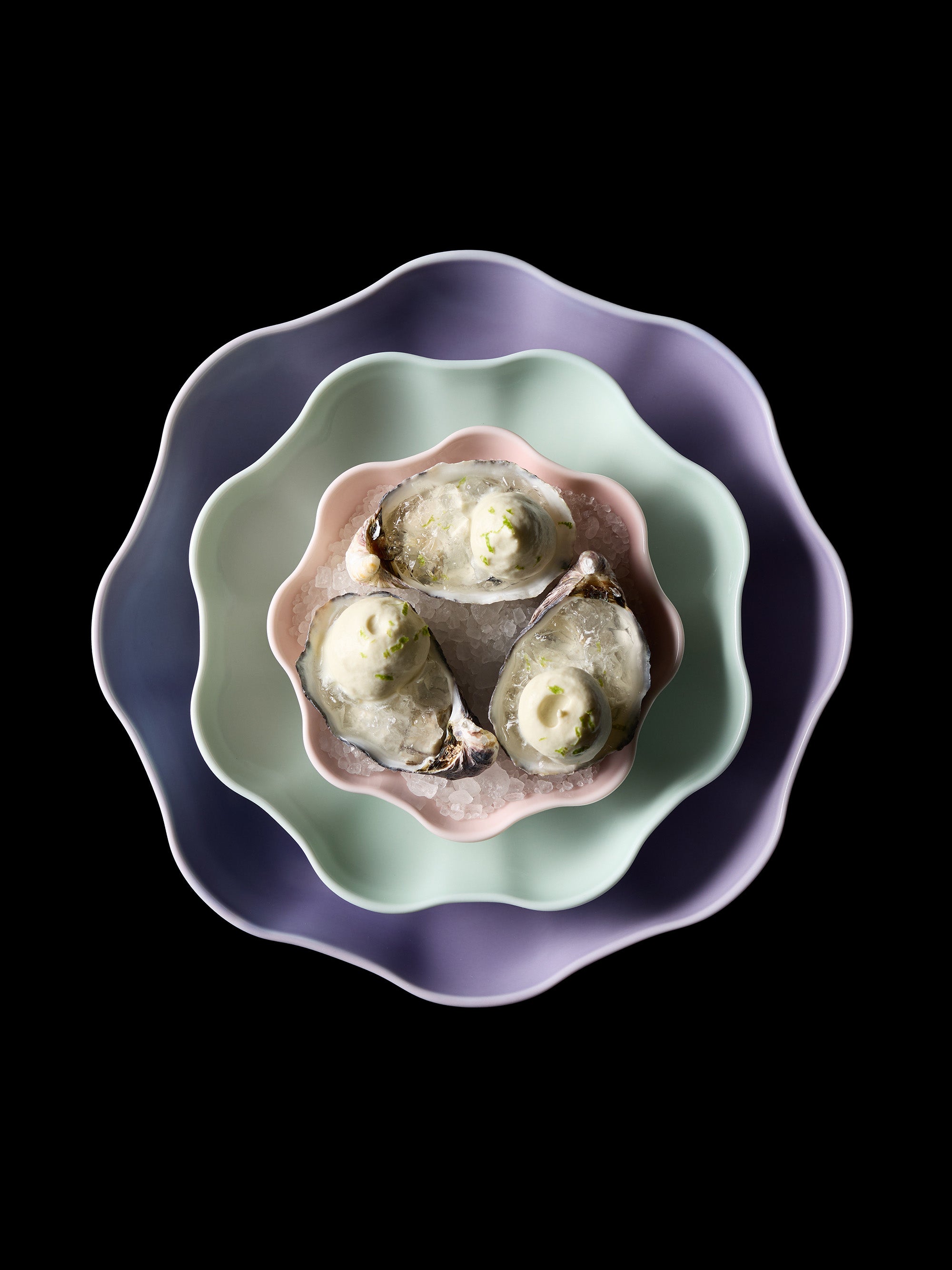
Rather than continuing to use these skills for inexpensive mass production, I wanted to develop designs through a series of processes that take advantage of a precision impossible to achieve by hand. The Ku project, launched on this occasion, aims to develop this approach into a new project through cooperation and exchange with people in different regions.
The works I present as an artist are somewhat removed from everyday life, whereas Ku has been developed as tableware for daily use. I also wanted to propose a new form of craft, and felt this connected with CFCL’s concept. When the bag for wrapping a cup was made, like the shifuku pouches used for tea utensils, I thought it was wonderful. At the same time, perhaps because I had never seen anything like it, there was something intriguing about not immediately understanding it.
Although I usually move between art and craft in my practice, working with vessels makes me feel that I am straightening my posture. Vessels are the starting point of my work. These may give a new impression of tableware, but I hope people will take a step forward and bring them into their lives.
Comment by Yusuke Takahashi, CFCL
The first artwork I ever bought, as a student, was by Takuro Kuwata. As CFCL creates clothing around the idea of Knit-ware as a kind of vessel, a collaboration with ceramics was a subject that interested me. It also overlaps with our iconic POTTERY series. The vivid color combinations in Kuwata’s work are appealing as clothing, too, and I wanted to create something new together.
I also share the aims of the Ku craft line that Kuwata is developing. I feel an affinity with its approach of revitalizing Japanese industry through creativity and sharing that work with the world. Vessels intended to be used, rather than ceramics made only to be admired, also have something in common with CFCL’s clothing.
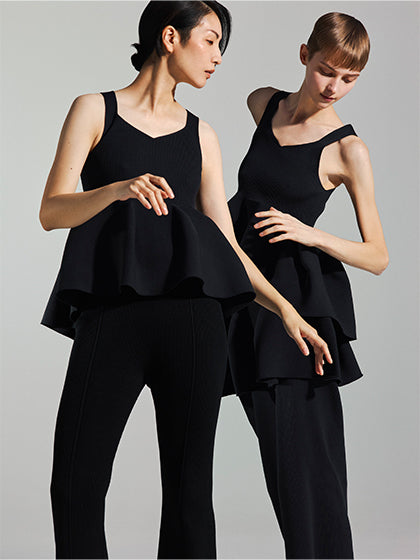
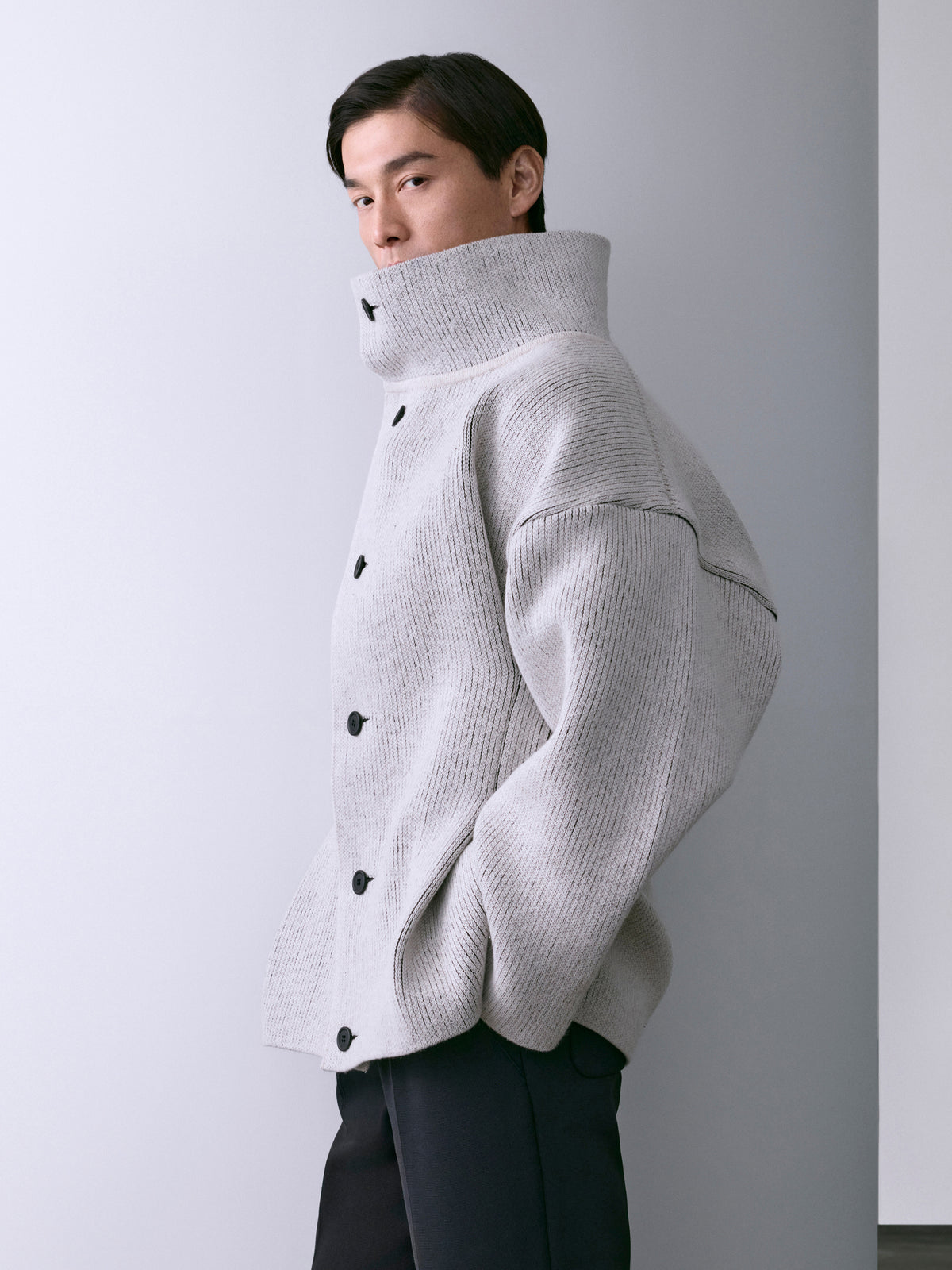
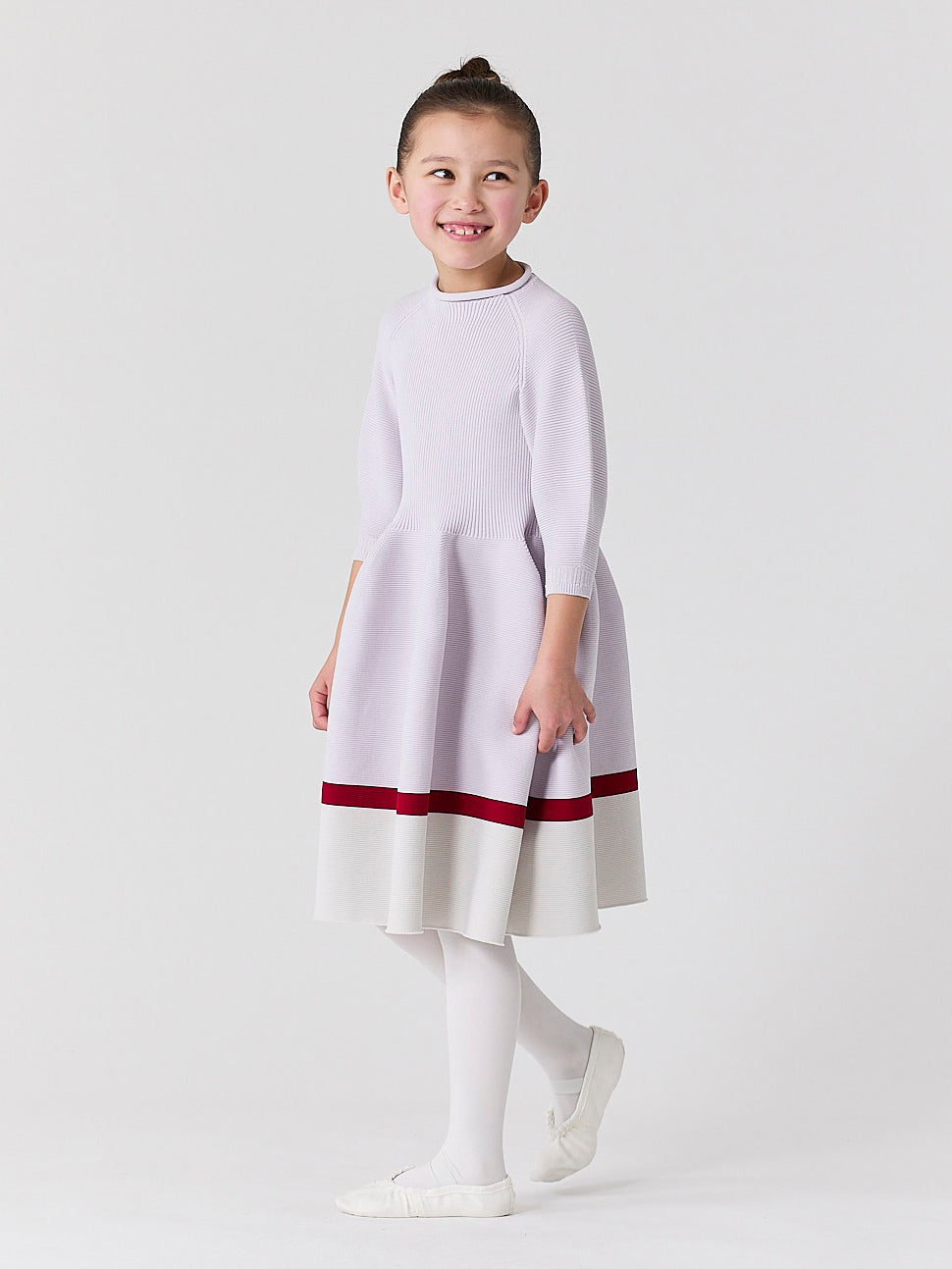
Although this is a collaboration with an artist, rather than placing part of an artwork onto clothing, we took a new perspective and made a bag inspired by tea utensils, designed to wrap a cup. Expressing something in knit to wrap ceramics rather than the body gives me a sense of crossing disciplines.
Ceramic Artists Curated by Takuro Kuwata
Tsubusa Kato
1962: Born in Tajimi, Gifu Prefecture1979: Completed studies at the Tajimi City Pottery Design and Technical Center
1986: Participated in the excavation of the Amagane ancient kiln site
2002: ‘One Hundred Years of Contemporary Ceramics,’ Museum of Modern Ceramic Art, Gifu
2003: ‘The World of White Porcelain and Celadon,’ Ibaraki Ceramic Art Museum
2013: Received the Japan Ceramic Society Award and the Enku Grand Award · Artist’s Comment

Artist’s Comment
The works I am exhibiting explore forms that make use of the properties of porcelain clay. As I work with clay in ceramics, I also look at myself.
Recommendation by Takuro Kuwata
There is a sense of live expression in the way Kato responds to the clay at each moment. His sculptural vessels are covered in a pale blue porcelain glaze that recalls a beautiful waterside. As a native of Tajimi, he has taught me about the history of this place, and I have learned from his approach of considering what to do now in light of the past.
Kentaro Kawabata
1976: Born in Saitama Prefecture
1998: Graduated from the ceramics department of Tokyo Designer Gakuin College
2000: Graduated from the Tajimi City Pottery Design and Technical Center
Artist’s Comment
I wanted to see in natural light the gradations created by glass scattered through porcelain. For me, this work has just the right vessel form.
I am not particularly good with words, but making work has helped me communicate. My works become starting points for all kinds of relationships with others, so I feel I can continue to follow the unexpected turns they bring.
Recommendation by Takuro Kuwata
What I like about Kawabata, both as a person and in his work, is the sense that he is always facing something and engaging in a dialogue with it, not only in ceramics but in everything. This is reflected in his work. He usually makes objects as well, but for this exhibition he has contributed vessels. I hope people can feel that atmosphere through them.
Yoko Tanaka
Born in Kanagawa Prefecture; currently works in Toki, Gifu Prefecture.2007: Graduated from the Department of Environmental Design, Faculty of Art and Design, Tama Art University
2008: Worked at a ceramics manufacturer in Mizunami
2011: Completed the Ceramics Lab course at the Tajimi City Pottery Design and Technical Center
2014: Shigeo Sakazaki Ceramics Award, International Ceramics Festival Mino
2019: Mainichi Newspapers Award, 25th Japan Ceramic Art Exhibition, Ibaraki Ceramic Art Museum

Artist’s Comment
I think that using things in everyday life is itself craft, and I am exhibiting works that make me imagine how enjoyable it would be to use them in particular situations. I create with the hope of bringing new values into being.
Recommendation by Takuro Kuwata
Although speaking in terms of men and women may be outdated, Tanaka’s work conveys a powerful sense of womanhood, and ‘expressive artist’ is a fitting description of her. Rather than arising from a predetermined design, her works emerge through experimentation with materials and processes. I feel that the form of the vessel takes shape through this process, together with the maker’s humanity.
Yuka Hayashi
1971: Born in Hyogo Prefecture1994: Graduated from the Faculty of Economics, Kansai University
1998: Completed studies at the Toki Municipal Institute of Ceramics
1999: World Craft Competition Kanazawa
2004: Asahi Contemporary Crafts Exhibition
2005: International Ceramics Festival Mino; white porcelain entered the collection of the Gifu Prefectural Ceramic Museum as a permanently preserved work of Mino ceramics
2006: Takaoka Craft Competition
2008: Spirit of Oribe Ceramics Exhibition
2012: Excellence Award, Contemporary Tea Ceramics Exhibition
2016: Excellence Award, Hagi Grand Prize Exhibition IV
2019: Contemporary Tea Ceramics Exhibition
2019: Excellence Award, Hagi Grand Prize Exhibition V
2021: A Shino tea bowl entered the collection of the Toshin Mino Ceramic Art Museum as a permanently preserved work of Mino ceramics
2022: Japan Traditional Art Crafts Exhibition
2023: Special Jury Award, Hagi Grand Prize Exhibition VI

Artist’s Comment
I began making ceramics because I admired Momoyama Shino, one of the traditional glazes of Mino ware. These works also use Shino techniques. I would like to propose Shino that fits comfortably into contemporary life. I would be happy if people find a sense of comfort in looking at and using them.
Recommendation by Takuro Kuwata
Hayashi works in many different styles, but the series exhibited here uses the traditional Shino glaze. While carrying on a glaze that dates back to the Momoyama period, she transforms it across time into contemporary vessels. She is an artist who makes things that I strongly feel should become part of people’s everyday lives.
Yuichi Murakami
1982: Born in Tokyo2001: Began five years of work at Shinman Yamada’s studio in Yomitan, Okinawa
2009: Completed studies at the Tajimi City Pottery Design and Technical Center
2011: Established a studio in Toki, Gifu Prefecture

Artist’s Comment
I am exhibiting works based on two concepts. One is makai, the Okinawan word for a bowl. Reinterpreted in my own way after training in Okinawa, makai is a staple bowl that I want to keep making.
The woven vessels are smooth white porcelain fired at high temperatures, inspired by antique Western mesh plates. I like simple vessels that are like background music. I want to create by listening to the material and grasping the foundations of ceramic history.
Recommendation by Takuro Kuwata
Murakami traveled on foot from Tokyo to Okinawa, encountered ceramics there, and now has a studio in a Mino ware town. I admire the way he sincerely expresses what he has seen and experienced through vessels, and his commitment to representing the place where they are made. He studies many types of ceramics and draws on that knowledge to express himself through the styles he loves.


